


History repeats itself: a major oil-producing nation is attacked, oil markets react, prices surge. Kuwait in 1990, Iraq in 2003, Libya in 2011, Saudi Arabia in 2019, Ukraine in 2022. In “normal” times, folks in the comfortable West don’t think much about energy (beyond the American public’s pathological obsession with gas prices), but when moments like these happen—as with the war on Iran right now—we’re painfully reminded how much of our daily lives depend on things happening very far away that we have precisely zero control over. And by proxy, we’re reminded how much of our entire existence is predicated on the availability of cheap energy, propped up by the global infrastructure and cooperation required to move that energy around the world.
What’s unfolding in Iran right now is repeating the cycle, and of course the stakes are always higher when Iran is involved because of the Strait of Hormuz; roughly 20% of the world’s oil (and a similar percentage of the world’s fertilizer) passes through this single, narrow route.
Astonishingly—I mean that literally; it’s genuinely astonishing—the Trump administration purportedly “underestimated Iran’s willingness to close the Strait of Hormuz,” even though, as one former U.S. official explained: “Planning around preventing this exact scenario … has been a bedrock principle of US national security policy for decades.”
There’s plenty more I could say about how foolish, unnecessary, poorly planned, and unpopular the war on Iran is, but that’s not the focus of this piece. This piece is about energy security.
The Role of Fossil Fuels in Modern Life
Fossil fuels are known for their potency and portability. As we’re seeing, under current conditions, the former is heavily impacted by the latter. When portable energy can’t be, well, ported, and demand must look elsewhere, supply costs increase (oftentimes based more on perception and opportunism than actual supply-demand economics). Thus, the simple fact that fossil fuels have to be extracted and transported across vast distances becomes a flaw when global cooperation breaks down.
Unfortunately, life as many Americans, Europeans, and other wealthy populations know it is predicated on uninterrupted “good times,” which is why you may be suddenly hearing about soaring gas prices and, depending on where you live, energy rationing, rolling blackouts, and other fun/not-at-all disruptive prospects.
The part that’s easy to miss is how quickly this stops being just “about oil” and starts being about…everything else. The price of fuel is baked into nearly every step of modern life—growing food, transporting it, keeping buildings running, manufacturing basic goods. As referenced above, supply doesn’t even need to collapse—just the threat of disruption is enough to induce chaos. Markets move on anticipation and oil companies preemptively hike pries. It’s a structural vulnerability; we’ve built a world where stability depends on a long chain of things consistently going right (geo)politically, militarily, and logistically.
Solar Now, Please?
At some point, we ought to stop and ask ourselves: how many times will we need to relearn this lesson before we actually change our behavior?
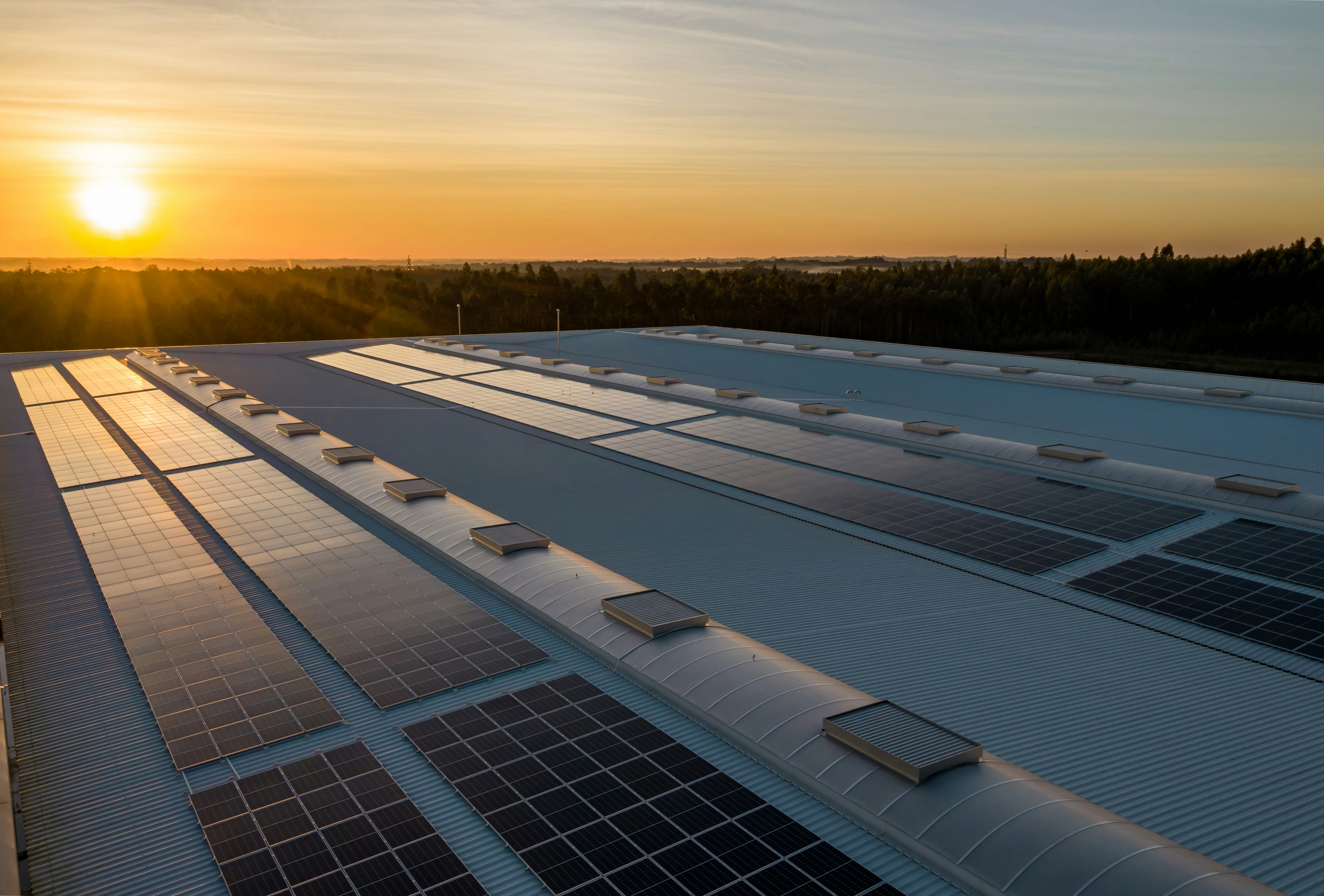
It’d be one thing if this switch were far out of reach, but it’s not. Solar energy has seen a meteoric pace of innovation and reduction in production costs over the past few decades. If we exerted the political will to incentivize it and fought to overhaul utilities as public goods rather than profit-making enterprises, we would not only decrease our dependence on fragile global systems, we would—depending on where we respectively live and the available sunlight—likely pay a lot less for energy in the long run. And to state the obvious: once installed, solar is not dependent on globalization and just-in-time logistics. It simply depends on the sun, which we have good reason to believe will keep on shining for the next ~5 billion years.
To understand how fossil fuel infrastructure is throttling the energy transition, watch this episode of Urgent Futures with Prof. Brett Christophers:
Brett Christophers: The Real Reason Renewables Aren't Replacing Fossil Fuels at Scale | #47

Welcome to the Urgent Futures podcast, the show that finds {signals} in the noise. Each week, I sit down with leading thinkers whose research, concepts, and questions clarify the chaos, from culture to the cosmos.
Resilience is a cool word, but it often looks boring in practice. It looks like decentralization—like millions of small, unremarkable systems quietly doing their job instead of a few massive ones (which create isolated points-of-failure) that everything depends on. It’s essentially redundancy vs. efficiency. It’s not a silver bullet—we will continue to face a number of other immense obstacles—but if lots of us had rooftop or ground-mounted solar; if we pushed our local communities to implement public solar energy and utilities optimized for it, we’d be going a great way toward ensuring that we could meet our basic energy needs and take care of each other, regardless of what's happening in shipping routes.
I’m in no way trying to glass-half-full the war, here; again, it’s reckless and as conducted is only producing suffering. But I’m encouraging us to recognize it as an occasion to eke out one modest but profound win in the face of a tentacular catastrophe. Solar is a darling of the climate community for good reason—make no mistake: we absolutely must curb carbon emissions if we’re going to survive this century—but this isn’t even a moral argument, it’s a security argument.
Resilient Energy for VUCA Futures
For all the ways Biden’s IRA was a step in the right direction, it embedded the assumption that top-down approaches to the energy transition would be the way the U.S. would decarbonize. Yes, some of the barriers to adoption are federal, and we need to fight for these too—things like sanction policies and tax incentives—but so much else can be addressed at the local level. Ask yourself: what could happen in my community that would spur solar adoption and decrease fossil fuel dependence? Then ask yourself: how could I bring those about? No wrong answers here; creative workarounds encouraged!
We tend to treat moments like the war in Iran as interruptions—temporary shocks to an otherwise stable system, from which we’ll eventually return to “normal.” I’m asking you to view moments like this as your normal now; they are instances of a failing system revealing its true self. More will come, and probably with higher frequency, more startling volatility, and more lasting consequences.
The 21st century is and will continue to be the story of VUCA: volatility, uncertainty, complexity, and ambiguity. We all—but especially those of us in wealthy western nations—have to stop pretending that we live in a relatively stable and abundant mid-20th century paradigm (all requisite asterisks here about stability and abundance for whom). We have to face reality as we encounter it in fact, and act accordingly. The most painful outcome of our fossil-fuel dependence is the ongoing destruction of the biosphere, but let’s not forget that it’s also just going to cost us a whole lot more than the alternative(s)—literally, emotionally, and psychologically.
We know we have to end our addiction to fossil fuels; why not go ahead and kickstart the transition to solar (and, yes, wind + other “renewable” sources)? It might seem like an uphill battle now, but as the war in Iran is clearly communicating: it’s only going to get harder as time marches on.
Another post you might like:
The Los Angeles Fires, Polycrisis, & How to Live in Collapse | Urgent Futures Rapid Response #2

With Urgent Futures and Reality Studies, a big focus of mine has been communicating the very real and imminent dangers of the polycrisis. And, as many of you know, I live in Los Angeles. So you can imagine I’ve been working through a lot with regard to the Los Angeles fires.
The war on Iran is proving why we need international law protected and true democracy nurtured. It is also a reason why the middle east should be free from nuclear weapons, no exceptions allowed.
In the middle east, one country has by far more nuclear bombs per population than any other country on this earth; has an extreme ethno-religious government supported by more than 80% of its population; armed to the teeth with the best Western weaponry; and protected from international law either by the weaponisation of guilt or the Epstein factor.
You might get all solar energy you want tomorrow, and the human race will still send itself to extinction by heads of states and the economic systems of MIC, PIC, AIC and the like.
no. There is no version of, or approach to solar energy that makes sense in any way. Green energy is all a gigantic boondoggle, and anyone who pursue this agenda needs to think twice.